
India retailed approximately 1,83,204 electric two-wheelers in August 2026, according to FADA retail registration data. That is a jump of about 67% over August 2025, when roughly 1,09,673 units were registered. Compared with July 2026, however, the market fell by around 10.35%, from about 2,04,362 units.
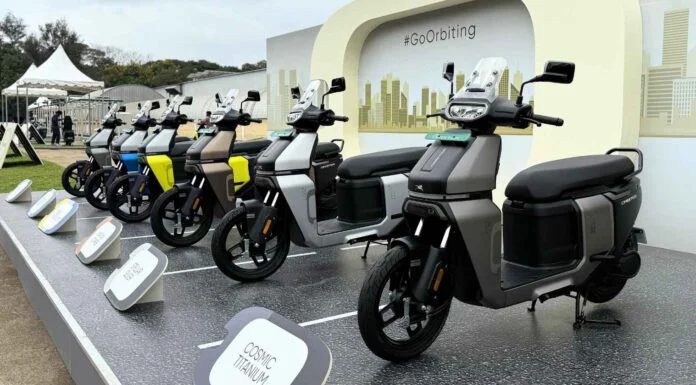
TVS Motor recorded the highest retail volume in the reported dataset at 48,873 units, followed by Bajaj Auto at 41,019 units. Ather Energy retailed 28,708 units, while Hero MotoCorp’s electric two-wheeler business recorded 18,978 units. Ola Electric was the notable exception to the broader growth trend, registering 13,849 units against 19,464 units a year earlier.
All figures in this report are retail registrations, not factory dispatches. That distinction matters, and it is explained in the methodology section at the end.
Electric Two-Wheeler Sales August 2026: Full Brand-Wise List
The table below uses FADA retail registration data consistently for every row. Market share is calculated against the total of 1,83,204 units for August 2026.
| Manufacturer | Aug 2026 | Aug 2025 | YoY Growth | Market Share (Aug 2026) |
|---|---|---|---|---|
| TVS Motor | 48,873 | 25,646 | ~91% | ~27% |
| Bajaj Auto | 41,019 | 12,246 | ~235% | ~22% |
| Ather Energy | 28,708 | 19,210 | ~49% | ~16% |
| Hero MotoCorp / Vida | 18,978 | 13,769 | ~38% | ~10% |
| Ola Electric | 13,849 | 19,464 | ~-29% | ~8% |
| Greaves Electric / Ampere | 8,612 | 4,567 | ~89% | ~5% |
| River Mobility | 5,134 | 1,903 | ~170% | ~3% |
| BGauss | 4,844 | 1,729 | ~180% | ~3% |
| Others | ~13,187 | — | — | ~7% |
| Total | 1,83,204 | 1,09,673 | ~67% | 100% |
Two notes on reading this table. First, the eight named manufacturers account for roughly 1,70,017 units, with the remainder spread across smaller brands. Second, percentage growth figures are rounded. A manufacturer growing 235% from a small base is not the same story as a manufacturer growing 91% from a large one, and both numbers need to be read with the base in mind.
TVS Electric Two-Wheeler Sales August 2026

August 2026: 48,873 units
August 2025: 25,646 units
YoY growth: ~91%
Market share: ~27%
TVS recorded the highest retail volume among the manufacturers in the FADA dataset for August 2026. The company’s electric portfolio is built around the iQube, with the Orbiter adding volume at a lower price point.
The ~91% year-on-year growth is substantial, but it is worth noting that TVS is growing from a much larger base than Bajaj was a year ago. In August 2025, TVS was already retailing over 25,000 units a month, so doubling that figure represents a large absolute addition — roughly 23,000 extra units per month.
The market-share figure of around 27% makes TVS the largest single player in the reported dataset. No judgement is being made here about whether that position will hold; this article reports the August 2026 data only.
[Internal Link: TVS iQube]
Bajaj Electric Two-Wheeler Sales August 2026
August 2026: 41,019 units
August 2025: 12,246 units
YoY growth: ~235%
Market share: ~22%
Bajaj Auto recorded the highest year-on-year percentage growth among the top manufacturers in the dataset. The Chetak is the principal model driving this volume.
The 235% figure needs context. Bajaj retailed just 12,246 electric two-wheelers in August 2025, so the year-ago base was small relative to TVS’s. A 235% increase from that base works out to roughly 28,800 additional units — a large absolute gain, but the percentage is inflated by where Bajaj started.
Bajaj now sits second in the retail ranking, roughly 7,850 units behind TVS for the month. The gap between the two is far narrower than the growth percentages alone would suggest.
[Internal Link: Bajaj Chetak]
Ather Electric Scooter Sales August 2026
August 2026: 28,708 units
August 2025: 19,210 units
YoY growth: ~49%
Market share: ~16%
Ather Energy recorded growth of roughly 49% year on year, the slowest rate among the top four manufacturers in the dataset. That is not necessarily a sign of weakness — Ather’s August 2025 base of 19,210 units was already the third-highest in the market, so maintaining growth from that level is a different proposition from growing off a smaller base.
The Rizta family is understood to contribute a significant share of Ather’s volumes. Model-level attribution is discussed separately below, along with a caveat about the dataset.
Ather sits third in the retail ranking for August 2026.
[Internal Link: Ather Electric Scooters]
Vida Electric Scooter Sales August 2026
August 2026: 18,978 units
August 2025: 13,769 units
YoY growth: ~38%
Market share: ~10%
Hero MotoCorp’s electric two-wheeler business, retailed under the Vida brand, recorded approximately 38% year-on-year growth. This is the slowest growth rate among the top five manufacturers in the dataset.
The Vida range has expanded over the past year, with multiple variants now on sale. Model-level attribution within the Vida range is not clearly separable from the dataset used here, so the OEM-level figure is the reliable number.
Hero MotoCorp has one of the widest distribution networks in India, which gives the Vida brand a reach advantage that newer EV-only manufacturers do not have. How much that translates into retail volumes in the coming months is beyond the scope of this report.
[Internal Link: Hero Vida Electric Scooters]
Ola Electric Sales August 2026
August 2026: 13,849 units
August 2025: 19,464 units
YoY decline: ~-29%
Market share: ~8%
Ola Electric was the only major manufacturer in the dataset to record a year-on-year decline in August 2026. Volumes fell from 19,464 units to 13,849 units, a drop of roughly 5,600 units.
This is a genuinely different trend from the rest of the market. While TVS, Bajaj, Ather and Hero all grew, Ola’s retail registrations contracted. The reasons behind this movement are not established by the dataset, and this report does not speculate on them. Attributing sales changes to specific causes requires evidence — regulatory filings, company statements, documented product or pricing changes — and none of that is available from registration data alone.
Ola remains among the larger players by absolute volume, but its position in the ranking has shifted relative to the growth recorded by competitors.
Other Manufacturers
Three other brands are worth noting from the dataset, since all three recorded strong growth from relatively small bases.
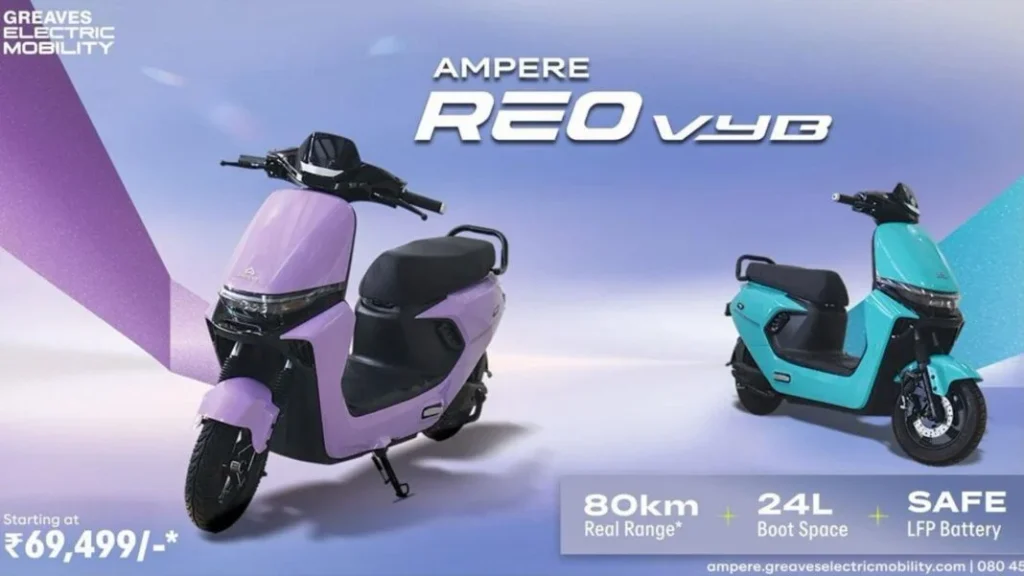
Greaves Electric / Ampere — 8,612 units (Aug 2026) vs 4,567 units (Aug 2025), ~89% growth
River Mobility — 5,134 units vs 1,903 units, ~170% growth
BGauss — 4,844 units vs 1,729 units, ~180% growth
All three grew sharply in percentage terms because their August 2025 bases were small. In absolute terms, each added between 3,100 and 4,000 units over the year. These are meaningful gains for smaller brands, but they do not yet translate into double-digit market share.
Top Electric Scooters in August 2026
Model-level data for August 2026 has been reported as follows:
| Model | Aug 2026 |
|---|---|
| Bajaj Chetak | 52,248 |
| TVS iQube | 42,882 |
| Hero Vida | 25,558 |
| Ather Rizta | 22,586 |
| TVS Orbiter | 14,641 |
Important caveat: these figures cannot be reconciled with the OEM-level retail data above, and they should not be read as directly comparable.
Here is the problem. Bajaj Auto’s OEM retail figure for August 2026 is 41,019 units. The model-level figure attributed to the Chetak is 52,248 units — higher than the entire Bajaj OEM total. Similarly, TVS iQube (42,882) and TVS Orbiter (14,641) sum to 57,523 units, which exceeds TVS’s OEM total of 48,873. And Hero Vida’s model-level figure of 25,558 exceeds Hero MotoCorp’s OEM total of 18,978.
These discrepancies mean the two datasets are built on different bases. The model-level numbers are likely to reflect a different measure — possibly wholesale dispatches, a different reporting period, or a different registration source — and they should not be mixed with the retail registration table.
The honest position is this: the OEM-level table is internally consistent and sums to the reported market total. The model-level figures come from a different basis and cannot be used to make direct comparisons with it. Readers tracking specific models should treat the model-level numbers as indicative until the source and methodology are clarified.
This is also why market-share calculations in this article are done only at the OEM level, using one consistent denominator.
July vs August 2026 Electric Two-Wheeler Sales
| Month | Retail Units |
|---|---|
| July 2026 | ~2,04,362 |
| August 2026 | ~1,83,204 |
| Change | ~-10.35% |
August 2026 retail registrations fell by roughly 21,158 units compared with July 2026, a decline of about 10.35%.
This needs to be read carefully. A month-on-month decline does not mean the electric two-wheeler market is contracting. August 2026 was still up around 67% over August 2025. The month-on-month drop follows a record July, and month-to-month movements in vehicle registrations are influenced by a wide range of factors including the number of working days, registration backlogs, festive timing and seasonal demand patterns.
Without evidence identifying a specific cause, this report does not assign one. The data shows what it shows: a decline from July, and strong growth over the year-ago month.
August 2026 vs August 2025
| Period | Retail Units | YoY Growth |
|---|---|---|
| August 2025 | ~1,09,673 | — |
| August 2026 | ~1,83,204 | ~67% |
The market added roughly 73,500 units year on year, a growth rate of around 67%.
Six of the eight named manufacturers in the dataset recorded double-digit or higher growth. Ola Electric was the exception. Growth was spread across both established two-wheeler manufacturers entering the EV space and dedicated EV brands, which is a change from earlier phases of the market when newer entrants dominated the volume charts.
No forecast is being made here about where the market goes next. Sales data describes what has happened, not what will happen.
What the August 2026 EV Sales Data Shows
A few factual observations from the dataset:
Established manufacturers now lead the volume charts. TVS and Bajaj occupy the top two positions in the retail ranking for August 2026. Both are traditional two-wheeler manufacturers with extensive dealer networks.
Growth is broad but uneven. Six of the eight named manufacturers grew year on year. One declined. The range of growth rates — from roughly 38% to roughly 235% — reflects different bases as much as different momentum.
Market concentration is significant. The top five manufacturers account for roughly 83% of retail registrations in the dataset. The remaining share is spread across a long tail of smaller brands.
Model-level data needs clarification. As noted above, the model-level figures reported for August 2026 are not consistent with OEM-level retail data. Until the basis of that dataset is clarified, model-level rankings should be treated with caution.
July remains the high point of the quarter. August’s month-on-month decline follows a stronger July. Whether that reflects a genuine trend or normal monthly variation cannot be determined from two months of data.
Sales Data Methodology
The sales figures in this report are based on FADA retail registration data for August 2026, collated from 1,467 of 1,469 RTOs.
A few points readers should keep in mind when interpreting these numbers:
Retail registrations are not wholesale dispatches. Retail registration data reflects vehicles registered with regional transport offices. This can differ from factory dispatches to dealers, and from company-reported sales figures. The three measures serve different purposes and should not be mixed.
Figures can be revised. Registration data is sometimes updated after initial publication as late entries are processed. The numbers in this report reflect the data available at the time of writing and may be revised later.
Market share is calculated from a single dataset. All market-share percentages in this article use the FADA retail total of 1,83,204 units as the denominator. Percentages published elsewhere may differ slightly if a different dataset or a different total is used.
Model-level and OEM-level data are kept separate. As explained in the model section above, the model-level figures circulating for August 2026 cannot be reconciled with the OEM-level retail data and have not been combined with it.
Growth percentages are rounded. Figures such as “~91%” or “~235%” are rounded to the nearest whole number. Small differences between this report and others may reflect rounding.
FAQs
How many electric two-wheelers were sold in India in August 2026?
Approximately 1,83,204 units were retailed, according to FADA retail registration data.
Which company sold the most electric two-wheelers in August 2026?
TVS Motor recorded the highest retail volume in the reported dataset at 48,873 units.
How many electric scooters did TVS sell in August 2026?
TVS Motor retailed 48,873 electric two-wheelers in August 2026, up from 25,646 units in August 2025.
How many electric two-wheelers did Bajaj sell in August 2026?
Bajaj Auto retailed 41,019 units, up from 12,246 units a year earlier.
How many electric scooters did Ather sell in August 2026?
Ather Energy retailed 28,708 units, compared with 19,210 units in August 2025.
How many electric two-wheelers did Vida sell in August 2026?
Hero MotoCorp’s electric two-wheeler business, retailed under the Vida brand, recorded 18,978 units, up from 13,769 units a year earlier.
Which was the highest-selling electric scooter in August 2026?
Model-level data reported for August 2026 shows the Bajaj Chetak at 52,248 units. However, that figure is higher than Bajaj Auto’s entire OEM retail total for the month, so the model-level dataset does not reconcile with OEM retail registrations. Readers should treat the model-level ranking with caution until the basis of that dataset is clarified.
Did electric two-wheeler sales increase or decrease compared with July 2026?
Retail registrations decreased by roughly 10.35%, from approximately 2,04,362 units in July 2026 to approximately 1,83,204 units in August 2026.
How much did electric two-wheeler sales grow year-on-year in August 2026?
Retail registrations grew by roughly 67% compared with August 2025.
Which major EV manufacturer recorded a YoY decline?
Ola Electric was the only major manufacturer in the dataset to record a year-on-year decline, falling from 19,464 units in August 2025 to 13,849 units in August 2026.
Final Notes
August 2026 was a strong month for India’s electric two-wheeler market on a year-on-year basis, with roughly 67% growth in retail registrations. TVS and Bajaj led the volume charts, Ather and Vida recorded steady growth, and Ola Electric was the outlier with a decline. The month-on-month dip of about 10.35% from July’s record level does not change the annual picture.
The main caution for readers is the model-level data. As things stand, the model-level figures reported for August 2026 do not reconcile with the OEM-level retail data, and this report has kept the two separate rather than merging them into a single ranking. That is the responsible way to handle a discrepancy of this kind.